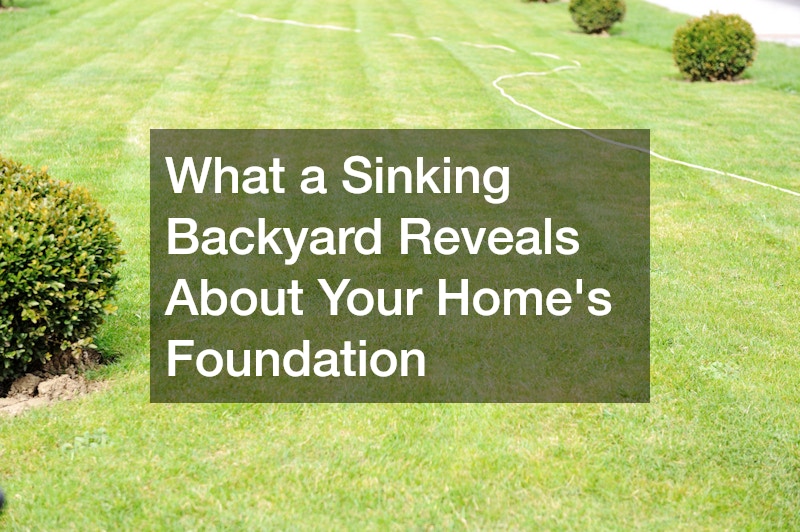
A sinking patch of lawn might look like a minor cosmetic nuisance, but it is often the first visible sign of movement happening deep beneath your home. Soil erosion, poor drainage, and shifting fill dirt do not stop at the edge of your yard; they frequently extend under your foundation as well. Understanding what causes these depressions can help you catch a serious structural issue before it turns into an expensive repair. This article walks through the most common causes of yard sinking and what each one might mean for your home’s foundation.
Soil Erosion and Foundation Settling
When soil beneath your yard washes away or compacts unevenly, it creates hollow pockets that eventually cause the surface to dip. Heavy rain runoff, poor grading, and leaking gutters or downspouts are common culprits, slowly carrying fine soil particles away until a noticeable low spot forms. This same soil often continues underneath your home’s footprint, meaning the erosion causing your sunken lawn could be quietly undermining your foundation’s support.
Homes built on expansive clay or poorly compacted fill are especially vulnerable to this kind of gradual settling. Clay soil swells when saturated and shrinks dramatically as it dries, creating repeated cycles of movement that stress footings over time. Fill dirt that wasn’t properly compacted during construction behaves similarly, settling unevenly under the weight of the structure years after the home was built.
The location of the sinking matters, too. A dip near a corner or along one side of the house often points to isolated settling under that section of the foundation, while widespread depressions across the yard may signal a broader drainage or grading problem. Either way, the pattern of erosion outside can offer real clues about which part of the foundation is under the most stress.
Left unaddressed, uneven settling can lead to cracked walls, sticking doors, and sloped floors inside the house. Small hairline cracks may seem cosmetic at first, but growing gaps around windows and doors are usually a sign that the movement is ongoing rather than a one-time event. Catching these warning signs early, both in the yard and inside the home, can make repairs far less invasive and costly.
Soil erosion beneath your yard doesn’t stay confined to the yard — it often travels toward the foundation, carrying support away from underneath your home one heavy rain at a time. If you notice one corner of your yard sinking faster than the rest, or standing water collecting in a spot that used to drain fine, it is worth having a professional evaluate whether house leveling is needed to correct the underlying structural shift. A difference of even one to two inches across a foundation can signal that soil displacement has already started affecting your home’s stability.
Common culprits include poor drainage grading, leaking gutters that dump water in one concentrated spot, and underground plumbing leaks that slowly wash soil away from footings. Homes built on expansive clay or loose fill soil are especially prone to this kind of uneven settling, since those soils shift more dramatically with changes in moisture.
Catching the problem early, while the settling is still minor, generally makes the correction process faster and less invasive than waiting until the damage is severe. Early intervention might involve simple piering or grading adjustments, while delayed cases can require extensive underpinning, foundation replacement sections, or full house leveling to restore the structure to a safe, stable position.
Broken or Leaking Underground Plumbing
A soggy or sinking area of lawn that never seems to dry out is a classic symptom of a leaking sewer or water line beneath the surface. Constant moisture erodes surrounding soil, creating voids that collapse under the weight of the ground above. This is especially common near older cast iron or clay pipes that have shifted or cracked over time.
Regular maintenance of cleanouts can help you spot these leaks before they cause major yard or foundation damage. A cleanout gives plumbers direct access to the sewer line without digging up your entire yard, making it much easier to run a camera inspection and pinpoint exactly where a pipe has failed.
- Persistent wet spots or unusual green patches in the lawn
- A sewage odor near the sinking area
- Slow drains or gurgling noises inside the house
- Unexpectedly high water bills
Storm Runoff and Grading Problems Around the House
Poor yard grading is one of the most overlooked contributors to foundation trouble. Builders typically aim for a slope that drops about six inches over the first ten feet away from the house, but that grade can flatten out over time as soil settles, mulch builds up, or landscaping projects unintentionally level things out. When the ground slopes toward your house instead of away from it, rainwater pools near the foundation walls and gradually washes away the supporting soil.
This is especially common near patios, driveways, and flower beds, where added soil or pavers often disrupt the original slope without anyone realizing it. Downspouts that empty right at the foundation make the problem worse, dumping hundreds of gallons of water into the same few square feet every time it rains. Over time, this creates sinking spots close to the home and increases hydrostatic pressure against the foundation itself.
That pressure doesn’t just erode soil — it can force water through hairline cracks in the foundation wall, leading to damp basements, efflorescence, or even bowing walls in severe cases. A yard that stays soggy for days after a storm, or that shows small puddles hugging the house, is often signaling that the grading has failed long before any cracks become visible indoors.
Severe weather can accelerate this process dramatically, and homeowners sometimes discover storm damage roof repair and foundation issues appearing at the same time after a major storm. A damaged roof often means missing shingles, clogged gutters, or bent downspouts, and any one of these can send water pouring in the wrong direction. Once that storm damage roof repair gets scheduled, it’s worth glancing down at the yard too, since the two problems are frequently connected.
Heavy rain that overwhelms gutters and downspouts often ends up dumping directly onto vulnerable soil near the foundation, so checking your grading after big storms is a smart habit. Ideally, the ground should slope away from your house at a rate of about 6 inches over the first 10 feet, giving water somewhere to go besides your basement walls. If puddles linger near the foundation for hours after a storm, or if you notice small channels carved into the soil, that’s a sign the grading has flattened out or reversed over time.
Downspouts that empty within a few feet of the house are another common culprit, since they concentrate large volumes of water into one small area instead of spreading it out. Extending downspouts at least 5 to 10 feet away from the foundation, or routing them into a drainage system, can make a noticeable difference. Left unaddressed, this repeated saturation softens the soil, invites erosion, and gradually undermines the footing beneath your home.
- Downspouts that empty within a few feet of the foundation, instead of extending 6-10 feet away where water can disperse safely
- Flower beds or mulch piled against the exterior walls, trapping moisture against the foundation instead of letting it drain outward
- Grading that slopes toward the house rather than away from it — ideally the soil should drop about 6 inches over the first 10 feet
- Visible pooling after rain that takes hours to drain, signaling compacted soil or a low spot near the foundation
- Gutters that overflow or are clogged, sending excess water straight down the siding and into the surrounding soil
- Cracks in the foundation appearing shortly after heavy storms, especially ones that widen or reappear after repairs
Tree Roots and Underground Utility Lines
Large trees planted too close to a house can cause sinking in two very different ways. As roots grow, they can absorb enormous amounts of moisture from the soil, causing it to shrink and settle unevenly. In other cases, aggressive roots physically invade and crack underground pipes, leading to the same kind of erosion caused by plumbing leaks.
Root intrusion into sewer and water lines is a common reason homeowners end up with unexplained soft spots or shifting soil, since roots are drawn to the moisture seeping from small cracks in aging pipes. If you have mature trees within twenty feet of your home, it is worth having their root systems assessed periodically to avoid surprises later.
Sinkholes and Voids Beneath the Yard
True sinkholes are less common than simple settling, but they do occur, particularly in regions with limestone or other soluble bedrock beneath the topsoil. These form when underground water slowly dissolves rock, creating a void that eventually collapses under the weight of the soil above it. A sinkhole near your home is a serious concern because the same void may extend under the foundation without any visible surface sign yet.
Homeowners in sinkhole-prone areas should watch for sudden, sharp-edged depressions rather than the gradual, shallow dips typical of ordinary settling. Unlike erosion-related sinking, sinkholes can appear quickly and expand rapidly, so any sudden hole in the yard deserves an immediate professional inspection rather than a wait-and-see approach.
Utility and Mechanical Equipment Sitting on Unstable Ground
Outdoor mechanical equipment is often installed directly on grade, which means sinking soil can tilt or destabilize these units just as easily as it affects a foundation. A generator, for example, needs a level and well-compacted pad, and homeowners who skip this step sometimes find themselves calling for generator repair after the unit shifts and damages internal components. Similarly, an outdoor mini split installation requires a stable base, since the condenser unit sitting on uneven ground can strain refrigerant lines and reduce efficiency over time.
If you notice sinking specifically around a generator pad, AC condenser, or other equipment platform, it is a strong indicator that the surrounding soil has lost its compaction and needs to be addressed before reinstalling or repairing the unit.
- Visible tilting of the equipment pad
- Gaps forming between the pad and surrounding soil
- Vibration or unusual noise from equipment sitting unevenly
- Water pooling around the base after rain
Swimming Pools, Decks, and Other Heavy Yard Structures

Backyard features like pools, decks, and patios add significant weight to the soil beneath them, which makes them particularly sensitive indicators of ground movement. A pool deck that suddenly develops a noticeable slope or gap where it meets the coping is often a sign that the soil supporting it has shifted or eroded. Because pools also involve their own plumbing and drainage systems, a leak can compound the sinking problem in ways that are not always obvious from the surface.
A local pool cleaner who visits regularly is often the first person to notice subtle changes in water level, cracked tile lines, or shifting deck material, since they are physically inspecting the area on a routine basis. Sharing any concerns about yard sinking near the pool with your maintenance provider can help catch a slow leak or settling issue before it becomes a costly structural repair.
Pest Activity That Can Worsen Soil Instability
Certain pests contribute to yard sinking in ways many homeowners never suspect. Burrowing animals like groundhogs and moles create tunnel networks that weaken soil structure, while termites and carpenter ants can hollow out buried wood debris left behind from construction, creating additional voids underground. Over time, these small tunnels and cavities collapse and combine with erosion to accelerate sinking near the foundation.
Bringing in a pest control company to inspect for burrowing activity or wood-destroying insects can rule out or confirm this contributing factor. This is particularly worth checking if the sinking area has soft, loose soil and shows no obvious signs of drainage or plumbing problems.
How Foundation Movement Shows Up Inside the Home
While the yard often reveals the first clue, foundation movement rarely stays outside. As the ground shifts, the frame of the house can shift with it, causing doors and windows to bind or fail to latch properly. One of the more noticeable signs is a garage door that suddenly starts sticking, reversing unexpectedly, or no longer closing flush with the ground, since the garage slab is directly connected to the same soil experiencing movement.
Interior systems can be affected too, and homeowners sometimes notice their HVAC struggling to maintain temperature or needing more frequent furnace repairs after ductwork or venting shifts along with a settling foundation. These secondary symptoms are easy to dismiss as unrelated mechanical issues, but when they appear alongside a sinking yard, they are worth mentioning to a foundation specialist.
- Doors and windows that stick or no longer close properly
- Visible gaps around window frames or exterior trim
- Cracks in drywall, especially near ceiling corners
- Uneven or sloping floors detectable with a level
A sinking backyard is rarely just a landscaping issue, and treating it as one can allow a much bigger structural problem to develop unnoticed. Whether the cause turns out to be soil erosion, a hidden plumbing leak, tree roots, or genuine foundation settling, the sooner you investigate, the more options and lower costs you will have. Start by observing the pattern, size, and speed of the sinking, then bring in the right professional, whether that is a foundation specialist, plumber, or drainage expert, to diagnose the root cause. Taking action now can protect not just your yard, but the long-term structural integrity of your entire home.